Becoming a psychologist or psychotherapist in Luxembourg
The complete guide to the process: degrees, professional authorisation, status and CNS reimbursement
Thinking about opening your own practice in Luxembourg? Between having your degrees recognised, obtaining a licence to practise, registering with social security, and getting CNS reimbursement for your sessions, the process can feel daunting. This guide walks through every step in order, with the concrete procedures, real costs and pitfalls to avoid.
One clarification up front, since it's the most common point of confusion: in Luxembourg, "psychologist" and "psychotherapist" are not the same legal status.

Psychologist or psychotherapist: what's the legal difference?
This is the starting point, and it shapes everything else in your setup process.
The title of psychologist is tied to holding a master's degree in psychology. As such, the psychologist profession is not subject to a professional healthcare authorisation in the same way psychotherapy is; discussions are nevertheless underway to also bring the psychologist title under legislation.
Psychotherapy, on the other hand, is a regulated healthcare profession under the Law of 14 July 2015. Practising it requires authorisation from the Ministry of Health and Social Security. A direct and important consequence for your practice : a psychologist holding only a master's degree, without authorisation to practise psychotherapy, cannot have their sessions reimbursed by the CNS. It is the psychotherapist authorisation that unlocks the provider code and, therefore, reimbursement.
In other words : if your goal is to offer sessions covered by health insurance, it is the authorisation to establish yourself as a psychotherapist that you should pursue. The rest of this guide details that path.
| Criterion | Psychologist | Psychotherapist |
|---|---|---|
| Required training | Master's degree in psychology | Master's in clinical psychology OR a medical degree + specialised psychotherapy training |
| Practising authorisation (Ministry of Health) | Not required for now | Mandatory (Law of 14 July 2015) |
| CNS provider code | Not accessible | Accessible |
| Sessions reimbursed by the CNS | No | Yes (70% adults / 100% minors) |
What degrees and training are required?
To obtain authorisation to practise psychotherapy, two levels of training are required.
Base training : either a master's degree in clinical psychology (or a psychology degree recognised as equivalent by the Ministry, on the advice of the Scientific Council for Psychotherapy), or a base medical degree.
Specialised psychotherapy training : you must hold a diploma, certificate or training title, Luxembourgish or foreign, relating to the psychotherapist profession.
On top of this, applicants must meet requirements of good conduct and character, physical and mental health, and sufficient language skills (see below).
Getting a foreign degree recognised
This is a step many discover too late, even though it conditions everything that follows.
For the psychology training title : if your degree was obtained in a country other than one of the three Benelux countries, it must first be registered with the register of training titles held by the Ministry of Higher Education and Research (MESR).
For the psychotherapy training title : if the degree was not obtained in Luxembourg, you must request its professional recognition from the MESR before applying for the practising authorisation.
The principle to remember : MESR recognition is a prerequisite that precedes the authorisation request to the Ministry of Health. Build this delay into your setup timeline.
Getting your licence to practise (psychotherapists)
Degree recognition
MESR, if the degree was obtained outside Benelux
Practising authorisation
Ministry of Health, via MyGuichet.lu, €75 fee
Registration & status
CCSS (self-employed intellectual worker) + professional liability insurance
Register listing (Ministry of Health and Collège médical)
Within the month following your setup
CNS provider code
Unlocks session reimbursement
This is the core of your setup process. The application is made online via MyGuichet.lu, preferably with authentication (LuxTrust or electronic ID card), which lets you save your file as you go.
Supporting documents to include :
- a copy of a valid ID document (or, for nationals from outside the European Economic Area (EEA), a valid residence permit or international protection document) ;
- a copy of your base training qualification ;
- where applicable, proof that your base qualification is registered with the register of titles ;
- a copy of your psychotherapy diploma ;
- where applicable, the MESR's professional recognition of your foreign degree ;
- a criminal record extract less than 3 months old ;
- a certificate of good physical and mental health issued by a doctor, less than 3 months old ;
- a curriculum vitae ;
- if your native language is not French, German or Luxembourgish, proof of your language skills.
Documents written in a language other than French, German or Luxembourgish must be accompanied by a sworn translation.
Timeline : once the file is complete, it is passed to the Collège médical for review, which takes between 3 weeks and 3 months. You then receive the decision by post. A complete file from the start is the best way to speed up processing.
Worth noting : the authorisation lapses if you do not practise in Luxembourg within 2 years of it being granted, or if you stop practising for more than 2 years. It remains renewable on request.
Language requirements
You must be proficient in at least French or German. The minimum level required is B2 on the Common European Framework of Reference for Languages (CEFR).
This level can be proven by your training qualifications obtained in one of these languages, by professional experience in a French- or German-speaking country, or, failing that, by a certificate issued by the Institut national des langues (INLL), the accredited examination centre in Luxembourg.
This is not a mere formality : a professional error caused by insufficient language proficiency can engage your disciplinary, civil and criminal liability.
Choosing your status and registering
Once authorisation is obtained, you need to structure your practice. If you set up as self-employed, this means choosing a self-employed status and registering with the Centre commun de la sécurité sociale (CCSS).
Two obligations not to overlook from day one :
Professional liability insurance is mandatory to cover risks related to your practice.
Register listing : your details appear in two registers, the professional register held by the Ministry of Health and the register of the Collège médical. You must register within the month following your setup, and keep this information up to date if it changes (address, email, phone).
The CNS provider code and session reimbursement
This is the step that makes your sessions reimbursable — and your practice attractive to patients.
For your services to be covered by the Caisse nationale de santé (CNS), you need a CNS provider code. The application is made to the CNS once you hold your practising authorisation.
Since 1 February 2023, psychotherapy has been reimbursed by the CNS.
Reimbursement for adults
Reimbursement for minors (under 18)
Official rate per session
Introductory (SP01), no prior prescription needed
Source: CNS, figures as of 01/06/2026.

The official rate for a session is €162.92 (as of 1 June 2026). This is the rate you must charge for your services to be covered.
Reimbursement conditions are cumulative — a single missing criterion is enough to exclude coverage :
- a medical prescription (from a GP or specialist) is required. Exception : the first 3 introductory sessions (SP01) can take place without a prior prescription, provided one is issued within 90 days of the first session ;
- sessions must take place in person — teleconsultations are not covered ;
- the patient submits the fee statement (with their 13-digit national ID number) along with the prescription to the CNS, within the required timeframe.
The nomenclature also caps the number of covered sessions over 5- and 10-year periods, depending on the type of session (introductory SP01, support SP02, extended support SP03).
To go further, see our guide to CNS invoicing and learn how Immediate Direct Payment (PID) works, which lets the CNS pay the practitioner directly instead of the patient having to pay upfront.
Good to know : CNS invoicing is going digital. Keeping a rigorous handle on your fee statements and their submission becomes a real organisational challenge for a practice just starting out.
How much does setting up cost? Summary of fees
This question comes up often, and the answer is reassuring : the administrative setup itself is inexpensive.
- Practising authorisation : a €75 fee per authorisation, paid at the time of application (by card for online applications via MyGuichet.lu). Note : this fee is not refunded if the application is refused or withdrawn.
- MESR degree recognition : a recognition fee applies for foreign degrees (amount to confirm with the MESR based on your situation).
- Sworn translations : needed if your documents are not in French, German or Luxembourgish.
- Professional liability insurance : cost varies by insurer and coverage.
- Medical certificate and criminal record extract : minor administrative fees.
The real "cost" of setting up is therefore not financial but lies in the time needed to build your file and in processing delays.
Where to set up and get known
Choosing where to locate depends on your target patients : the south of the country (Esch-sur-Alzette and its region) has a high population density, while the capital draws an international and cross-border patient base.
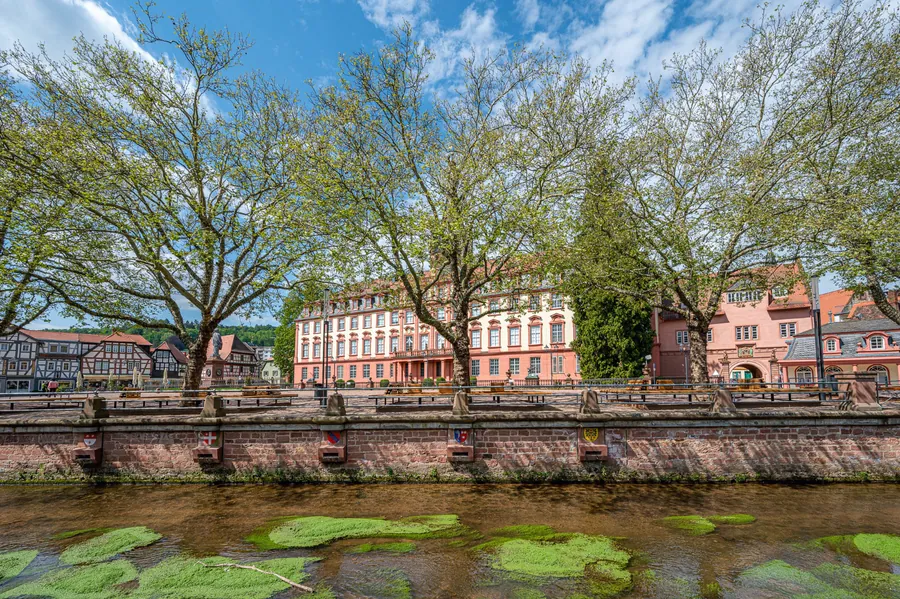
For visibility, joining the Société luxembourgeoise de psychologie (SLP) and being listed in professional directories both help build your reputation. A clear online presence — a professional website, easy booking — makes a real difference today for patients who search online first.
In summary
Setting up as a psychotherapist in Luxembourg follows a step-by-step logic : have your degrees recognised (MESR) if needed, obtain your practising authorisation (Ministry of Health, €75, via MyGuichet.lu), register as self-employed (CCSS) and take out professional liability insurance, then obtain the CNS provider code that unlocks session reimbursement. All of this takes planning, especially around recognition and review delays.
Once set up, the day-to-day running of the practice — appointments, patient records, compliant CNS invoicing — takes over. That's exactly where Sigmund comes in : scheduling, patient records and CNS invoicing brought together in one tool, built with mental health professionals in Luxembourg — book a demo to see it in action.
Frequently asked questions
Psychologist or psychotherapist : what's the legal difference?
What degrees do I need to practise psychotherapy in Luxembourg ?
How much does it cost to set up as a psychotherapist in Luxembourg ?
How do I get CNS reimbursement for my psychotherapy sessions ?
Related articles
Simplify your practice management from day one
Scheduling, patient records, CNS and PID invoicing : Sigmund centralises the admin so you can focus on your patients. Built in Luxembourg since 2013.